
Considered a Decorative Image
Federal Robotics

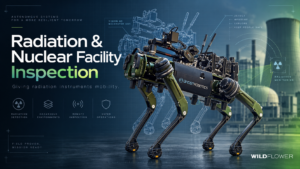
Radiation & Nuclear Facility Inspection Robots

In a radiological environment, sometimes the most useful thing a robot can do is simple: go where you would rather not send a person.
Imagine an abnormal radiation reading inside a facility. Before a technician enters, a quadruped robot equipped with the appropriate detector could be sent ahead to take readings at multiple locations and return that data to the team outside. It could approach the suspected source, stop at predetermined points, collect measurements, and provide cameras and other sensors with a view of the surrounding environment. The team now has information it did not have before anyone makes a decision about human entry.
Read More »
Considered a Decorative Image
Federal Robotics

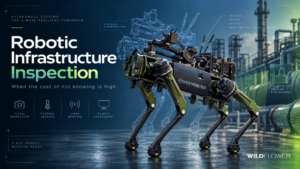
Robotic Infrastructure Inspection with Quadruped Robots

An inspection usually starts with a person going somewhere.
Someone walks the site. Climbs the stairs. Checks the equipment. Investigates an alarm. Looks for heat, leakage, damage, corrosion, movement, or something that simply does not look the way it did yesterday.

Read More »
Considered a Decorative Image
Federal Robotics

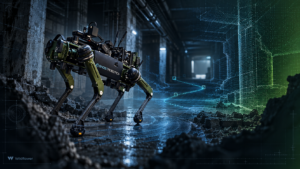
GPS-Denied Navigation for Ground Robots

On a modern battlefield, GPS is enormously useful. It is also something the warfighter cannot assume will always be available.
Buildings, terrain, tunnels, and subterranean spaces can block or degrade satellite signals. In a contested environment, an adversary may deliberately jam or spoof them. The Department of Defense has publicly described GPS and unmanned systems as targets of electromagnetic interference, while the Army has documented the operational consequences of losing GPS during unmanned ISR missions.

Read More »